
For people living with type 1 diabetes (T1D), access to care means everything. Timely diagnosis, uninterrupted access to insulin and glucose monitoring, and community and health system support are all essential for living a full, healthy life with T1D. Yet for many, this care remains out of reach.
The global number of people living with T1D is projected to grow by more than 50% by 2040, with the steepest rise in low- and middle-income settings that already face persistent gaps in diagnosis, treatment, and long-term care.
Over the years, governments, diabetes and community organizations, clinicians, and donors have worked to expand access and save lives. But too often, efforts have moved forward in isolation rather than in partnership with governments and communities, limiting the impact of existing investments.
Today’s challenge is not a lack of solutions. It is to turn what we know into equitable, sustainable access—delivered at scale, embedded within health systems, and shaped by the priorities of the countries and communities most affected.
Barriers along the care journey
Access to T1D diagnosis and care varies widely. In some countries, many people are never diagnosed or first receive care only after presenting with life-threatening complications. In other countries, diagnosis is more common, but consistent access to affordable insulin and basic care is uncertain. Essential technologies that are widely used in high income countries —including analogue insulin, pens, and continuous glucose monitoring devices—remain inaccessible for most people in low and middle income settings.
Behind the gaps lie systemic challenges: limited health worker training, fragmented procurement, high out-of-pocket costs, under-resourced data systems, and financing models that do not cover the full cost of lifelong diabetes care. Community and peer-support networks—central to education, psychological support, and advocacy—often reach only a small proportion of those who need them.
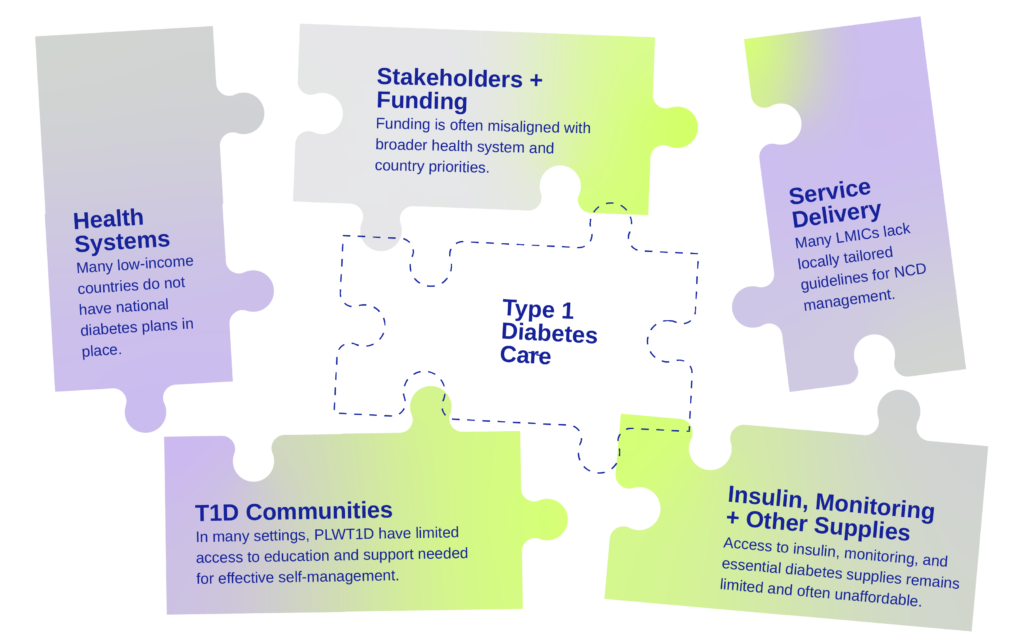
These challenges are not unique to any one country. Many reflect decades of underinvestment in noncommunicable diseases (NCD), limited resources to address competing health priorities, and health systems designed primarily for acute rather than chronic care.
Sustainable progress calls for a comprehensive, coordinated approach that moves these pieces forward together.
ALIGN-T1D, a country-led solution
ALIGN-T1D was created in response to these realities. The Alliance brings together governments, people living with T1D, funders, and implementation partners around a shared commitment to expand equitable access to T1D care, supplies and support in low- and middle-income countries.
In 2025, the Alliance developed a multi-year strategy through a global review of evidence and consultations with more than 70 stakeholders. Across these conversations, one message was clear: real progress depends on approaches that are country-led, community-informed, and aligned with national health systems and priorities.
Rather than prescribing one-size-fits-all solutions, ALIGN-T1D works with countries to define their priorities and pathways forward, partners with communities and countries to integrate type 1 diabetes into national health strategies, and helps optimize existing resources for impact.
ALIGN-T1D’s access strategy is built around five interconnected strategic objectives that reinforce one another and together support comprehensive T1D access:
- Strengthen integrated T1D service delivery
- Improve sustainable access to insulin, glucose monitoring, and essential supplies
- Support enabling health systems, including data, financing, and policy
- Amplify the role of T1D communities in education, peer support, stigma reduction, and advocacy
- Mobilize stakeholders and funding around shared, country-defined priorities
Progress in any one of these areas depends on progress in the others—and lasting change requires advancing them together.
Turning priorities into action
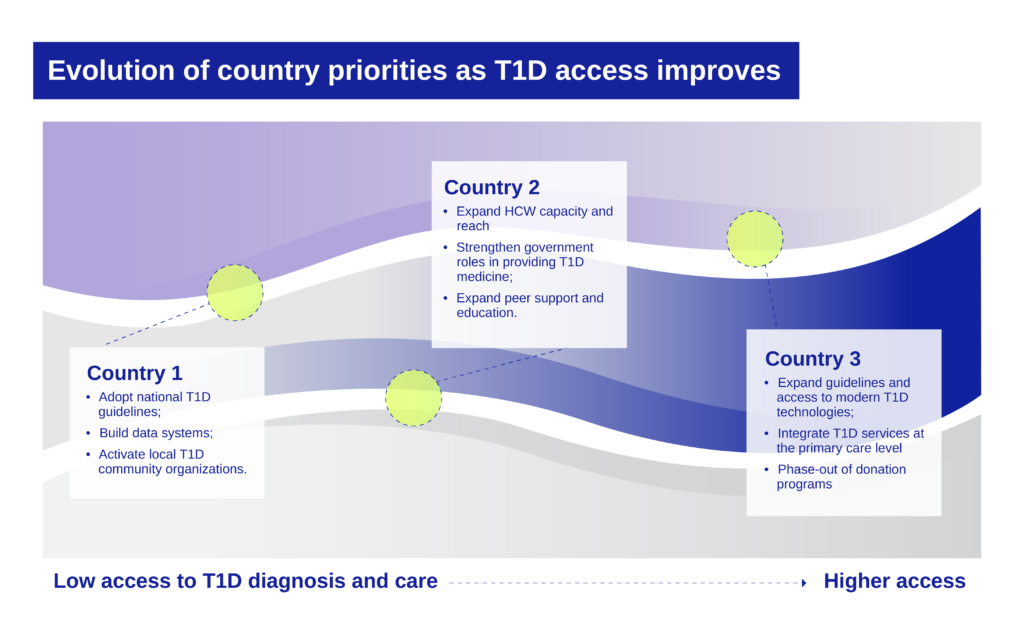
To turn these goals into action, ALIGN-T1D uses a practical framework that helps countries determine where to focus based their priorities, needs, and resources.
In settings with limited access, early efforts may focus on finding people living with T1D sooner and ensuring uninterrupted access to insulin and basic care. As systems strengthen, the focus can shift to improving the quality of care and building the data, financing, and policies needed to sustain it.
In every context, priorities are defined together with governments and communities and aligned with national health strategies.
Integrating T1D solutions for lasting impact
While ALIGN-T1D focuses on people living with type 1 diabetes, many of the systems that support them—healthcare worker (HCW) training, diagnostics, supply chains, data, and financing—also support people living with other noncommunicable diseases. Integrating T1D into broader health system platforms makes investments more efficient and sustainable for everyone.
At the same time, certain elements of care must be tailored specifically to T1D, including specialized clinical guidelines, peer-support models, and targeted community engagement. ALIGNT1D works across these interconnected layers, helping countries plan, finance, and deliver care.
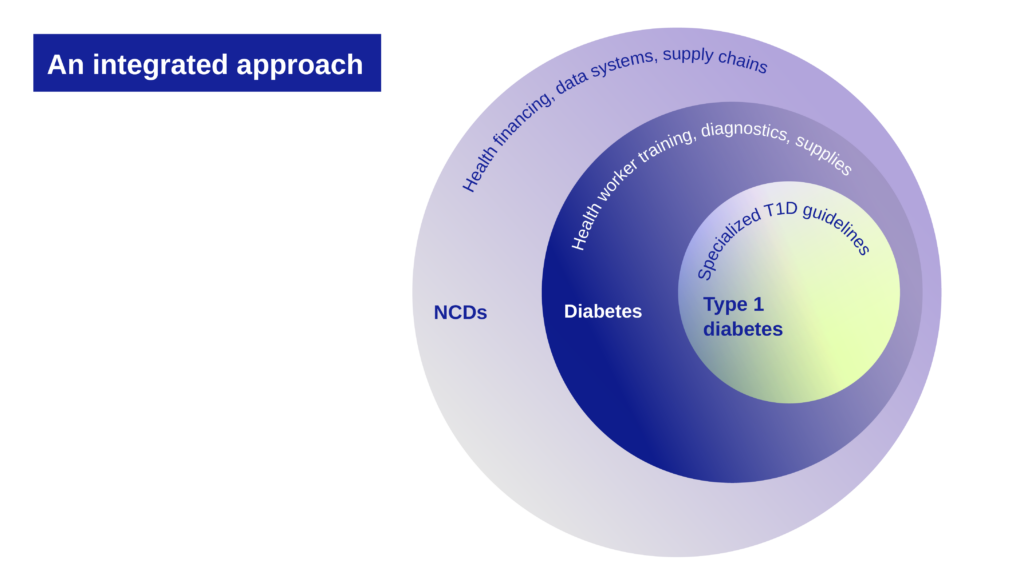
By building on existing national diabetes and NCD strategies, as well as World Health Organization-endorse strategies such as PEN-Plus, the Alliance supports government ownership, integration, and sustainability.
What comes next: learning, partnership, and engagement
ALIGN-T1D is entering an initial phase of country engagement, beginning in three geographies and expanding over time. In each setting, the Alliance is convening governments and in-country partners to identify priorities and support country-led proposals aligned with national health strategies. As this work unfolds, ALIGN-T1D will share lessons from early implementation and continue to refine its approach based on what works in practice.
Improving equity in T1D care will take time, trust, and sustained collaboration. Through its comprehensive, country- and community-driven approach, ALIGN-T1D aims to help ensure that everyone can access the care they need to live full and healthy lives.